
MLP boards · From multilayer plastic waste
Boards that do plywood’s work where water, termites and repeated use destroy it
Plywood-substitute boards pressed from multilayer plastic waste, for shuttering, cabins, partitions, toilets, school furniture, floors and block pallets.
GridMats® MLP boards are heat-pressed from 100% upcycled multilayer and single-use plastic, such as tetra packs, chip packets and aluminium-lined film. They are solid through their thickness, with no veneers, no core, no adhesive, no formaldehyde and no glue lines to delaminate. They take water without swelling, resist termites, and are recyclable again when they are worn out.
Ask on WhatsApp (opens in a new tab) Contact sales Product deck (PDF) (opens in a new tab)
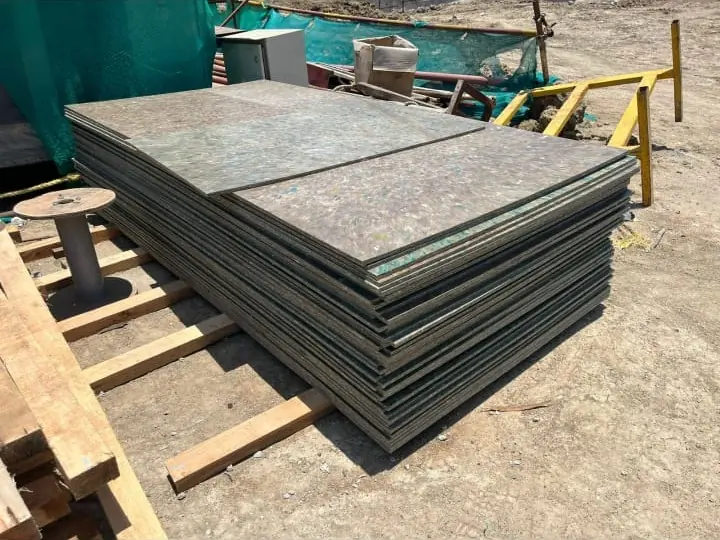
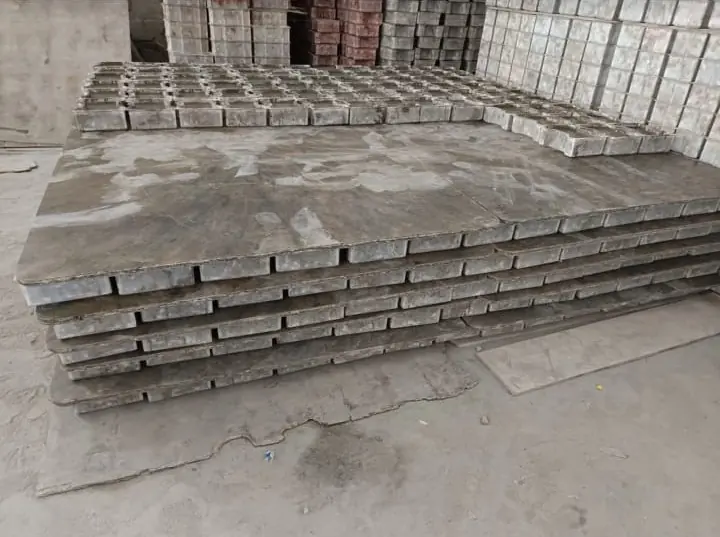
MLP boards stacked on site: the speckled face is the pressed plastic
Why a new board
Two problems that one board answers
Plywood on a wet site
- Water enters at every nail hole and cut edge; the sheet swells and delaminates.
- Good shuttering plywood typically gives 5 to 10 pours before it is cut down or scrapped.
- Termites and fungus attack it in storage, and it cannot be recycled, so it leaves the site as waste.
Multilayer plastic with nowhere to go
- Tetra packs, chip packets and aluminium-lined film are layers of plastic and foil bonded together.
- The layers cannot be separated, so ordinary recycling turns them away.
- With no use for it, it is dumped in landfill or burnt in the open.
MLP boards press that plastic into a solid 4 × 8 ft panel that does plywood’s work, takes water without swelling, and can be recycled again. Made in three plants in India under ISO 9001, ISO 14001 and ISO 45001.
Applications
Six places MLP boards go to work
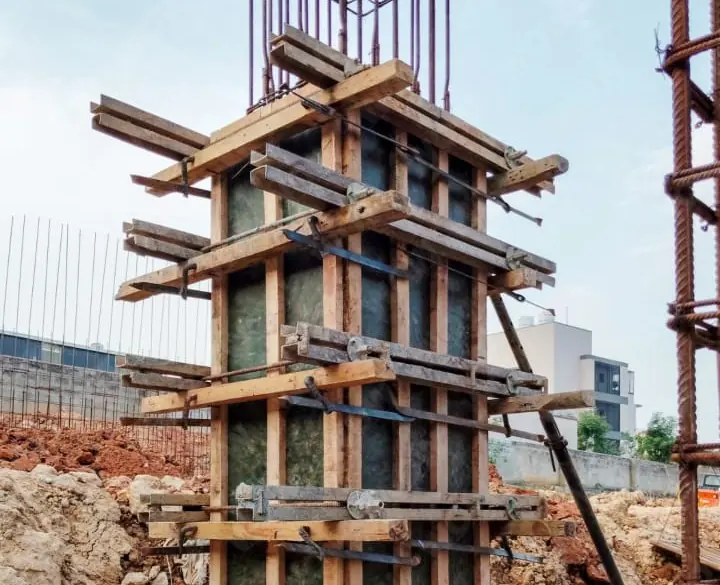
1 · Shuttering and drainage works
Shuttering that survives the wet cycle. The board does not swell at nail holes, leaves a smooth concrete face and comes away without sticking.
- Slabs: decking on steel supports or wooden runners
- Beams: sides and bottoms, including plinth beams
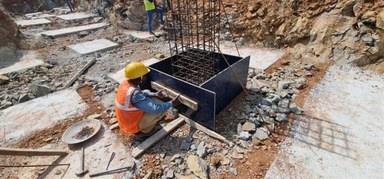
- Columns: boxes nailed or screwed as with plywood
- Retaining walls: vertical panels on steel supports
- Underpass walls: wall panels on highway works
- Drains and water tanks: shuttering that stands in water without swelling
- Curved and circular work: the 6 mm board bends to the radius
- Monolithic pours: walls and slab cast together
20+ repetitions on the data sheet; 40+ with good handling practice (the manufacturer’s figure). Reuse depends on how the boards are struck, cleaned and stored. Support spacing, loads and fixings are for your engineer to set from the board’s own figures.
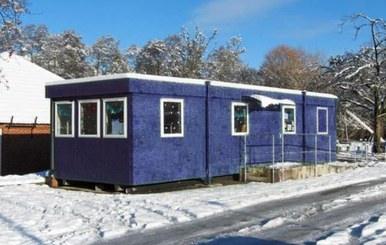
2 · Porta cabins, cabins and farm houses
Wall panels for buildings that stand in rain and sun.
- Porta cabins: wall panels on a steel frame for site offices, stores, guard rooms and labour rooms
- Cabins: security, ticket and kiosk cabins, and cabins inside factories and warehouses
- Farm houses: wall panels, partitions and stores, where damp and termites end plywood early
- Temporary site works: panels taken down and used again on the next job
The frame, roof, fixings and fire plan are for the cabin builder to design; the board is the wall panel.
3 · Partitions and toilets
Partitions, toilets and other wet rooms that are washed down every day.
- Partitions: dividing walls in offices, sites, factories and hostels, in a board that can be washed
- Toilet blocks: cubicle partitions and wall panels for public, school and site toilets that are hosed down daily
- Bathroom and toilet doors: a door leaf that does not swell, rot or feed termites, where a wooden door fails first
- Wash and utility areas: linings and panels around wash basins, kitchens and utility rooms
Used raw and washable, or faced in laminate or paint; cut, drilled and screwed with ordinary carpentry tools.
4 · Furniture and school tables
A direct replacement for particle board, MDF and plyboard. Carpenters turn the sheets into furniture with the tools they already use, and finish them in laminate or veneer.
- School tables and boards: tables, benches and boards for classrooms, which take daily knocks and wet mopping
- Office furniture: desks, storage and fit-out panels
- Home furniture and decor: shelving, cupboards, panels and decor pieces
- Corporate gifts: made-up items that carry a recycling story
For schools and the NGOs that equip them, corporates fitting out offices or running CSR projects, furniture makers, architects, interior designers and restaurants. Water- and termite-resistant, with no adhesive or formaldehyde.
5 · Flooring and resistant surfaces
Floors and surfaces that meet water and oil.
- Flooring: floors for cabins, stores and platforms, and sub-floors under a finish; it does not swell when the floor is washed or flooded
- Water-resistant surfaces: counters, shelves and work tops in wash areas, kitchens, canteens and stores
- Oil-resistant surfaces: work benches, shelving and trays in workshops, garages and machine rooms, where oil soaks into wood
Floor loads and spans are for your engineer to set. Tell us which oils or chemicals the surface will meet.
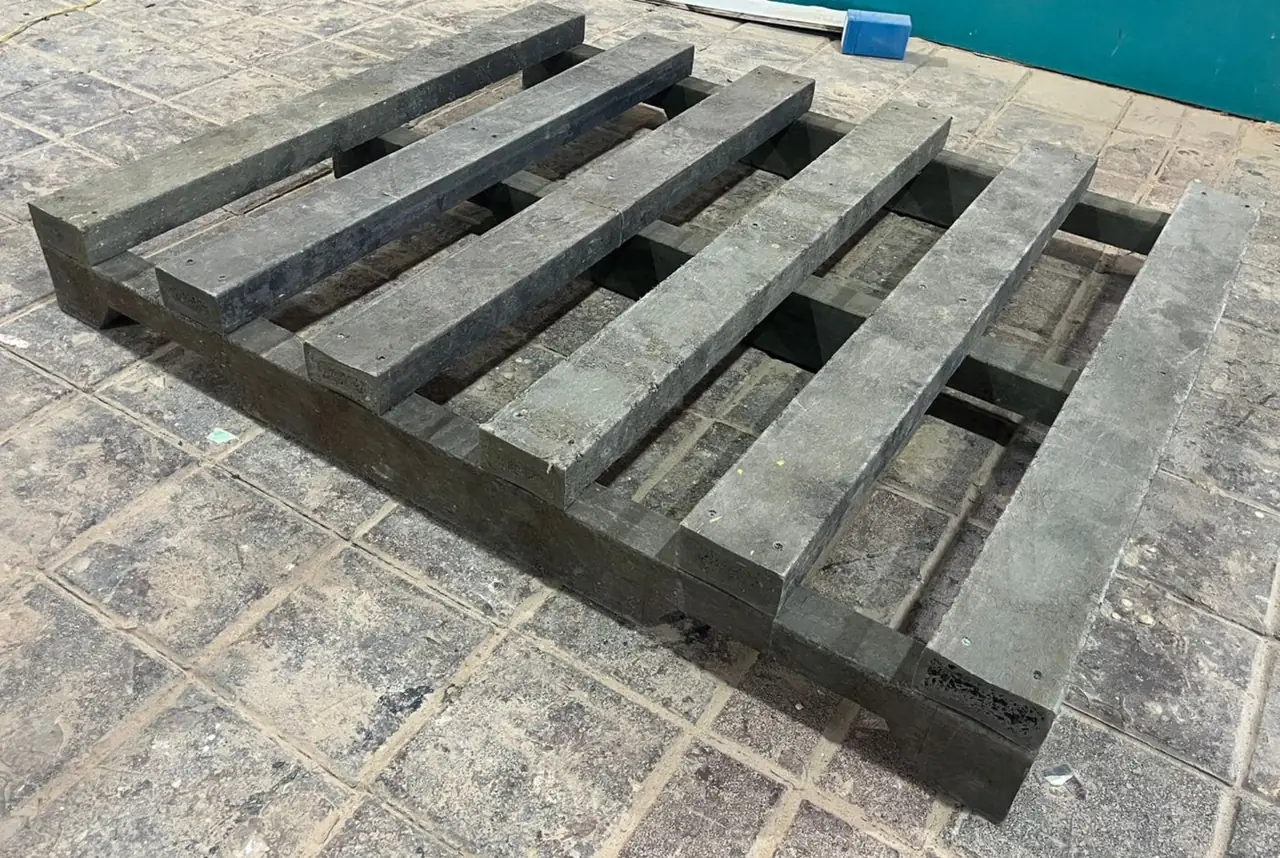
6 · Block production pallets
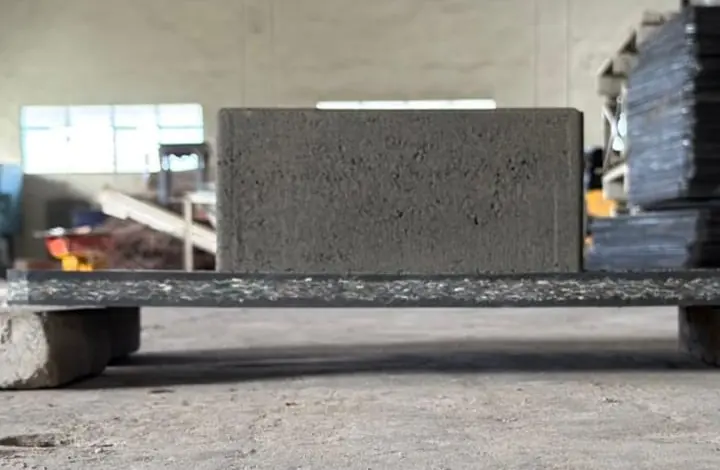
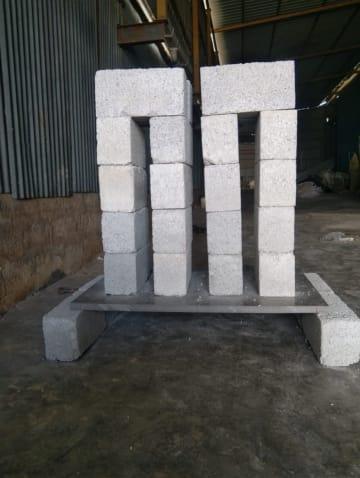
Production pallets for block-making machines.
- What it carries: paver blocks, solid and hollow concrete blocks, fly-ash bricks, clay bricks and interlocking tiles
- Built for the machine: takes the vibration and compaction of the press, cycle after cycle, and keeps its shape
- Wet all day: no swelling, rotting or pest damage in the curing yard; fresh blocks do not stick to the face
- Sizes: cut to your machine’s pallet size: machine pallets 30 to 50 mm thick; stacking and racking boards in 8, 12 and 16 mm
And more
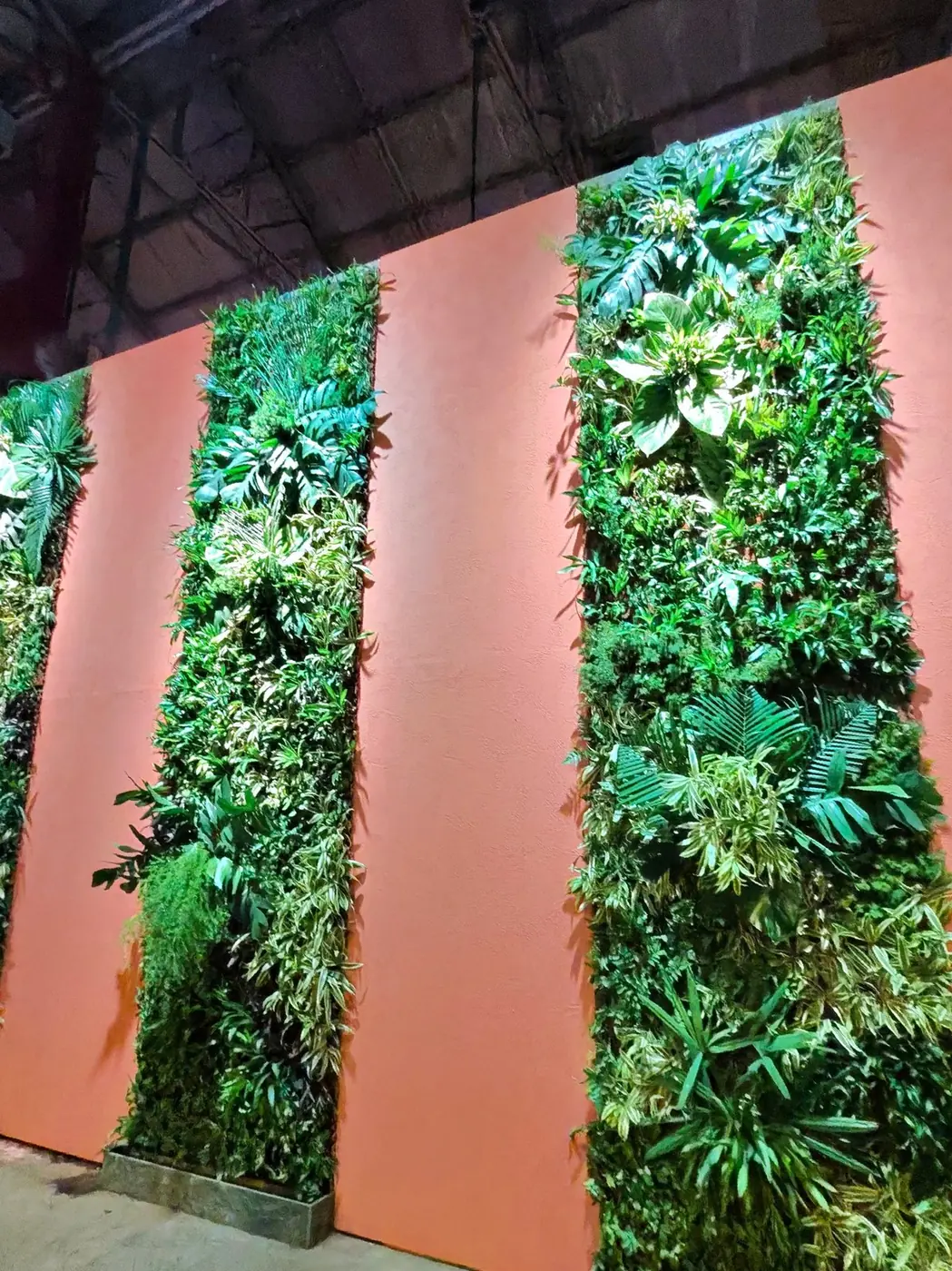
Living-wall backing board. GridMats’ own Cool Green Wall is built on MLP boards: a rigid backing that takes misting water every day without rotting or swelling.
Stacking and racking boards. 8, 12 and 16 mm boards under clay bricks, fly-ash bricks and pavers in the yard and on the rack.
Scaffolding and flooring support. Boards on scaffolds and under temporary floors; spans and loads are for your engineer to check.
Curved and cut-to-size panels. The 6 mm board bends to a radius; boards are cut to size for bulk orders.
Your use. Wherever plywood is replaced because of water, termites or wear, call or WhatsApp us with the use and the quantity.
The range
Five thicknesses, one panel size, four colours
| Thickness | 4 × 8 ft panel | Where it is usually used |
|---|---|---|
| 4 mm | 11 kg | Light panels and facings |
| 6 mm | 16 kg | Curved and circular shuttering: the board that bends |
| 8 mm | 21 kg | Stacking boards for bricks and blocks |
| 12 mm | 32 kg | Slab, beam, column and wall shuttering: the standard board |
| 16 mm | 43 kg | Heavier shuttering |
Panel weights are nominal, from a density of 0.9 g/cm³; a 16 mm high-density board is also made, and is heavier. A 4 × 8 ft panel is 1,220 × 2,440 mm. Thick boards of 30 to 50 mm for block-machine pallets.
Colours. Speckled grey (standard), black, blue and green; the pressed face is flecked.
Finish. A smooth pressed face, washable as it is. It takes laminate, veneer or paint.
Custom sizes. Other panel sizes, and boards cut to size, for bulk orders.
Tested
Board figures from Indian test houses
| Property | Result | Standard |
|---|---|---|
| Compressive strength | 18.7 MPa | ASTM D695 |
| Tensile strength, across the grain | 7.41 MPa | ASTM D638 |
| Tensile strength, along the grain | 5.10 MPa | ASTM D638 |
| Modulus of rupture, across the grain | 9.17 MPa | IS:1734 |
| Modulus of rupture, along the grain | 8.39 MPa | IS:1734 |
| Shear strength | 3.2 MPa | ASTM D143 |
| Young’s modulus | 998 MPa | ASTM D638 |
| Moisture content | 0.17% | ASTM D7191 |
| Density | 0.9 g/cm³ | Data sheet |
Water. No bulge after a 24-hour soak; no shrinking or swelling.
Pests and sunlight. Termite-resistant and UV-resistant, so it can be stored and used outdoors.
Surface. Smooth and washable in its raw form; takes a laminate or veneer overlay.
From the board’s data sheet and Indian test-house reports, each to a named standard; confirm them for your project.
Against plywood
MLP board and shuttering plywood, side by side
| Property | MLP board | Shuttering plywood |
|---|---|---|
| Made from | Upcycled multilayer plastic; no adhesive | Timber veneers bonded with resin |
| Water | No bulge after a 24-hour soak | Water-resistant; swells over wet cycles |
| Shuttering repetitions | 20+ on the data sheet; 40+ with good practice | Typically 5 to 10 |
| Termites and fungus | Resistant | Susceptible |
| Release from concrete | Does not stick; release oil optional | Needs release oil |
| Weight, 12 mm panel | 32 kg | About 25 kg |
| Stiffness | Lower: supports set closer | Higher |
| Fire | Combustible | Combustible |
| End of life | Recyclable again | Site waste |
Plywood entries are typical site values, not a test of a named product; compare against the plywood you buy. The 40+ figure is the manufacturer’s, where its handling practice is followed.
Design notes
What to allow for when you design with it
It is heavier than plywood
Density is 0.9 g/cm³, about 28% above plywood. A 12 mm panel weighs 32 kg and a 16 mm panel 43 kg, so plan handling and lifting for that.
It is more flexible than plywood
Young’s modulus is 998 MPa and the modulus of rupture 9.17 / 8.39 MPa. Set runner and prop spacing from these figures, not from plywood habit.
It is not flame-resistant
The data sheet makes no flame-resistance claim. Measured on the same material: burning rate 0.16 mm/s (ASTM D635). Treat it as combustible in your fire plan.
It is cut cool
Being plastic, it softens if the blade overheats. Use a fine-toothed blade at moderate speed and let it work at its own pace; for precise factory profiles, waterjet cutting.
On site: worked with the tools the site already has
Cutting. A circular saw with a fine-toothed blade (125 mm, 40 teeth) at moderate speed; pause on long cuts so it cools.
Nailing. 1.5 inch nails, as with shuttering plywood, 15 to 20 mm in from the edge and about 150 mm apart.
Screwing and drilling. Standard screws and bits; the board holds a screw again after it has been taken out.
De-shuttering and cleaning. The board comes away from the concrete without sticking. Wash the face after each pour; rain in the stack does not damage it.
A panel and shuttering material. Loads, spans and fixings for any structural or safety-critical use are for your engineer to establish.
Choosing
The board for the job
| Job | Thickness | What matters most |
|---|---|---|
| Slab, beam, column and wall shuttering | 12 or 16 mm | 20+ repetitions; supports set closer |
| Curved and circular shuttering | 6 mm | Bends to the radius |
| Drains and water tanks | 12 or 16 mm | Stands in water without swelling |
| Porta cabins, cabins, farm houses | Advised on your call | Rain, sun and termite resistance |
| Partitions | 16 mm | Rigid and washable |
| Toilets and wet rooms | Advised on your call | Washed daily; no swelling at the bottom edge |
| Furniture, school tables and boards | Advised on your call | Takes laminate and veneer; allow for weight |
| Flooring and resistant surfaces | Advised on your call | Loads by your engineer; washable face |
| Block-machine pallets | 30 to 50 mm | Cut to the machine; vibration and compaction |
| Stacking boards for bricks and pavers | 8, 12 or 16 mm | Wet yard; blocks do not stick |
| Light panels and facings | 4 mm | The thinnest, lightest board |
Thicknesses are a starting point; your engineer sets the supports, loads and spans.
Waste taken out, timber left standing
At 20+ repetitions against plywood’s 5 to 10, fewer sheets are bought, moved and scrapped. The waste is cleaned and sterilised before pressing, with no chemical additives.
Next step
Call or WhatsApp for a quote
- Tell us the job, the thickness (4 to 16 mm) and the colour.
- Tell us the number of boards and where they are to be delivered.
- We send your quote; supply follows your purchase order.
Minimum order 25 to 50 boards, set by the job and the delivery location. WhatsApp +91 63626 46287 or +91 81476 84653, or write to sales@gridmats.com.
Ask on WhatsApp (opens in a new tab) Product deck (PDF) (opens in a new tab)
Figures from the board’s data sheet and Indian test-house reports; confirm them for your project. Fabricated pallets in the same material: Pallets and MLP boards.
Pictures
More from GridMats
 Cool Green Wall
 Pallets and MLP boards
What would your road or yard cost on GridMats?
A free indicative estimate in about a minute. Our engineers follow with the design and the bill of quantities.
Get my free estimate Talk to an engineer on WhatsApp (opens in a new tab)
Buying for several sites? One rate for 12 months: the annual rate contract →